
Can stress damage my eyes really bad ?
We all are aware of the fact that the life of this century is not easy to live without technology. The race to achieve all of it makes human body to release cortisol. The stress hormones not only affect the limbs, mind and heart but the eyes also. There is a conditon called central serous chorioretinopathy (CSCR)- a retinal disorder that causes blurred or distorted vision.

CSCR and stress
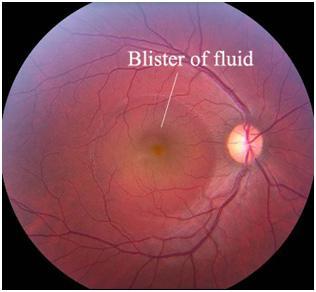
Central Serous Chorioretinopathy is an eye disease where fluid builds up under the retina (the light-sensitive layer at the back of the eye). This leakage creates a small detachment, leading to blurred or dim vision, dark spots, or distortion of straight lines.
- Stress hormones (cortisol): High stress levels increase cortisol, which is strongly linked to CSCR.
- Steroid use: Medications such as corticosteroids can trigger or worsen CSCR.
- Age & Gender: Most common in males between 20–50 years.
- Type A personality: People who are competitive, ambitious, and stressed are more prone.
- Other associations: Hypertension, sleep apnea, and use of stimulants.
Cause
The exact cause is not fully understood, but the main theory is that increased choroidal blood flow and vascular permeability by damaging outer blood retinal barrier (often triggered by stress hormones) leads to leakage under the retina.
Major signs and symptoms
- Blurred or distorted central vision
- Dark or gray spot in the center of vision
- Straight lines appearing bent (metamorphopsia)
- Reduced contrast sensitivity
Treatment
Most cases of CSCR resolve spontaneously within 3–4 months, but treatment may be needed for persistent or recurrent cases. Options include:
- Observation: In many cases, vision improves without treatment.
- Lifestyle changes: Stress management, reducing corticosteroid use (under medical guidance).
- Laser photocoagulation or Photodynamic Therapy (PDT): For chronic or recurrent cases.
- Medications: Such as oral eplerenone or spironolactone, which can reduce subretinal fluid.

Founder of EyesMatterMost- an optometry student who loves talking about eyes. I tend to cover topics related to optometry, ophthalmology, eye health, eyecare, eye cosmetics and everything in between. This website is a medium to educate my readers everything related to eyes.